
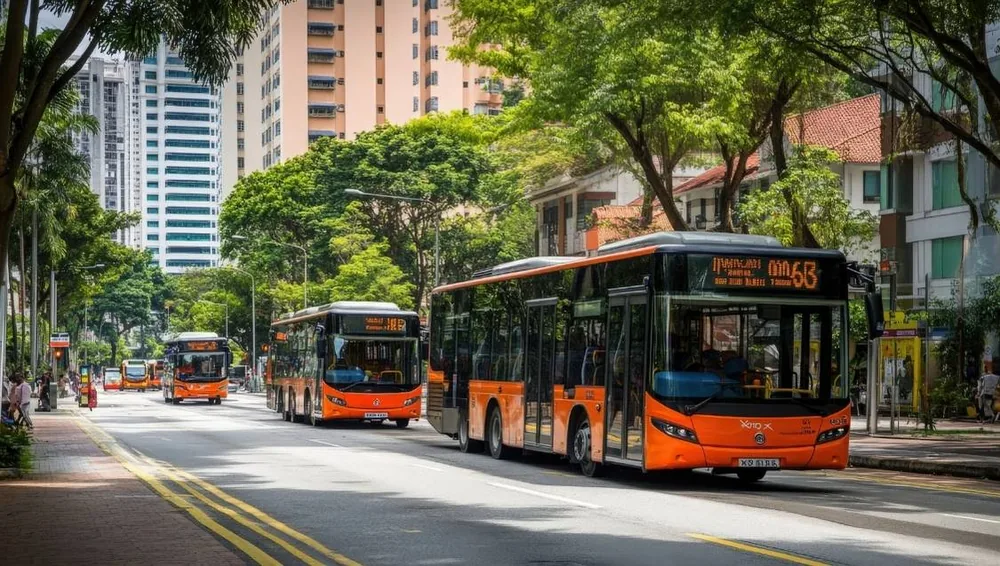
Modern transportation has evolved far beyond simply moving people from point A to point B. Today’s market is driven by efficiency, sustainability, safety, and intelligent technology—meaning organisations need to be far more selective when choosing a long-term mobility partner. If you want a solution that holds up against rising operational demands and shifting regulatory expectations, you must evaluate more than just the vehicle itself. Here are the essential features that separate genuinely modern transportation solutions from outdated offerings. <h3><strong>1. Advanced Safety Systems</strong></h3> Safety is the non-negotiable foundation of any transport investment. Leading solutions now integrate a full suite of smart safety technologies, including collision mitigation, 360° camera coverage, lane-keeping support, and automated emergency braking. These systems reduce risk, strengthen compliance, and cut long-term liability. If the solution doesn’t prioritise proactive safety, it’s already behind. <h3><strong>2. Smart Telemetry & Fleet Intelligence</strong></h3> Data is the new driving force of fleet optimisation. Look for embedded telemetry systems capable of delivering real-time diagnostics, driver behaviour analytics, predictive maintenance alerts, and route efficiency insights. A transportation provider without strong digital intelligence can’t help you reduce downtime or control operational costs—period. <h3><strong>3. Low-Emission or Zero-Emission Options</strong></h3> Regulations are tightening globally, and organisations that fail to transition will pay the price. Strong transportation offerings now include hybrid, low-emission, or fully zero-emission alternatives. Beyond regulatory compliance, these options reduce fuel dependency and support corporate sustainability commitments. A modern solution must be clean, compliant, and future-proof. <h3><strong>4. Passenger Comfort & Accessibility</strong></h3> Passenger expectations have changed. Modern transportation requires a comfortable, accessible environment—wide entryways, smooth suspensions, ergonomic seating, climate control, and full ADA/accessible configurations. The result is improved customer experience, higher ridership satisfaction, and strong long-term reliability in public or private service use. <h3><strong>5. Optimised Size & Versatility</strong></h3> One size no longer fits all. Modern transport solutions should provide right-sized options—compact, mid-size, and specialty configurations—to match specific operational needs. Versatility determines whether a fleet remains adaptable as demands shift. A provider offering modular solutions gives you the scalability older models can’t match.
<img src=""more-posts">← All articles